About Axio
Trust infrastructure
for human professionals.
Verification exists for payments, identity and credit. It does not exist for the people we leave our children with. Axio is building that layer, starting with sports coaching.
Vision
A world where every child has a coach they can trust.
Mission
Help every coach earn trust.
Not claim it.
Why now
Knowledge became abundant.
Trust did not.
AI changes what humans do. It does not change why humans matter.
AI lowers the cost of knowledge.
Human value shifts towards judgement, empathy, reliability and responsibility.
Professions built on those qualities become more valuable.
Those professions still run on fragmented reputation and guesswork.
The AI era needs professional trust infrastructure.
We begin with sports coaching.
Information can be copied.
Responsibility cannot.
A model can explain what a coach ought to do. It cannot be the person in the hall when a thirteen-year-old asks for help. That is why we assess judgement rather than replace it, and why the last decision, whether this is the right coach for your child, stays with you.
Why this exists
The gap is not awareness. It is evidence.
Almost every parent already knows to worry about this, and almost every good coach already behaves well. The failure sits in between them: there is no way for one to see the other.
So parents fall back on reputation, proximity and instinct. The coaches who take safeguarding most seriously get no credit for it. Meanwhile academies hire on word of mouth, and a coach asked to leave one centre quietly appears at the next one.
Certificates were supposed to solve this. They don’t, because they record attendance rather than judgement, and because nothing about them expires. Axio replaces the claim with dated, checkable, renewable evidence.
What we are not
Clarity requires refusal.
A trust layer is only useful if people know exactly what it is doing. These are the things Axio deliberately isn’t.
Not edtech
Learning exists to prepare a coach for assessment. We are not in the business of selling courses by the hour.
Not a certificate mill
A credential is only worth issuing if it changes a decision. If everyone passes, we have built nothing.
Not a profile you write yourself
Identity is not trust. Anyone can describe themselves well; the point is evidence somebody else can check.
Not a regulator
We do not own the profession or replace government oversight. We publish evidence against standards others set.
Not a marketplace
We do not rank coaches by price or take a cut of who gets hired. Price does not resolve uncertainty.
Not a rating
No score, no stars, no leaderboard. A competency is demonstrated or it is not yet demonstrated.
Guiding principles
Six things we don’t trade away.
Trust is earned, not claimed
Nothing goes on a profile because somebody said so. Every signal has a source, a date and a way to check it.
Assessment is more valuable than content
Courses are easy to build and easy to sit through. What a professional does when a situation arrives is the only thing worth measuring.
Demonstrated judgement beats memorised answers
Multiple choice measures recall. Spoken scenarios measure the thing parents are actually asking about.
Certification must remain meaningful
Money may buy learning or verification. It cannot buy the conclusion. If everyone passes, the signal is worthless.
Trust is continuously renewed
A credential earned three years ago describes a person who no longer exists. Six months, fresh scenarios, current standard.
Every line on a profile is evidenced
Every line on a profile is something we can show our working for. Precision is what makes a trust signal worth checking.
Standards
We don’t invent our own definition of safe.
Assessment is grounded in statute and in the safeguarding frameworks that already govern sport. Where the law is jurisdiction-specific, the content is configured per state and reviewed by counsel before it is published.
Who’s behind this
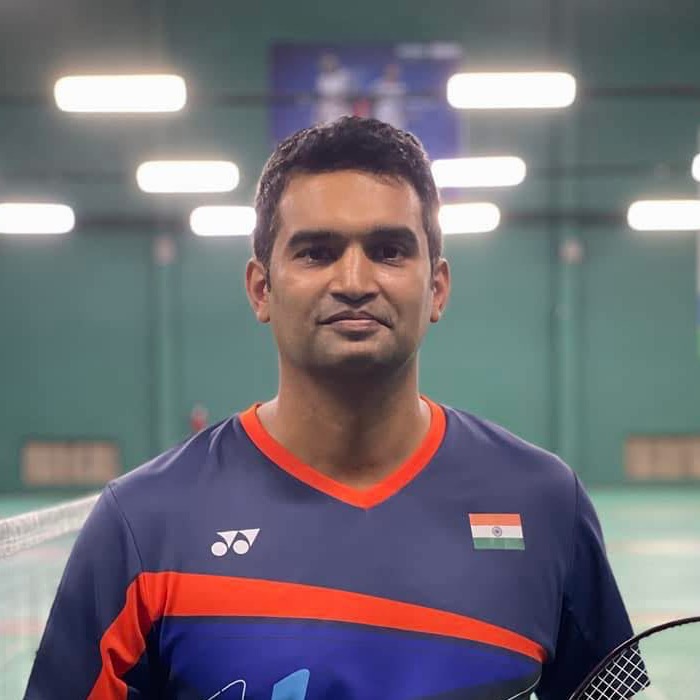
A standard is only as credible as the people behind it.


Our core principle
Evidence of demonstrated competence, against published standards, on a date you can check.
Contact
Talk to us.
Coaches
Create a profile and start the assessment. Nothing to pay during the pilot.
Academies
Certify your coaching staff and accredit your centre under the Safe Sport Standard.
Government & federations
Statewide standards, facility accreditation and department dashboards.